
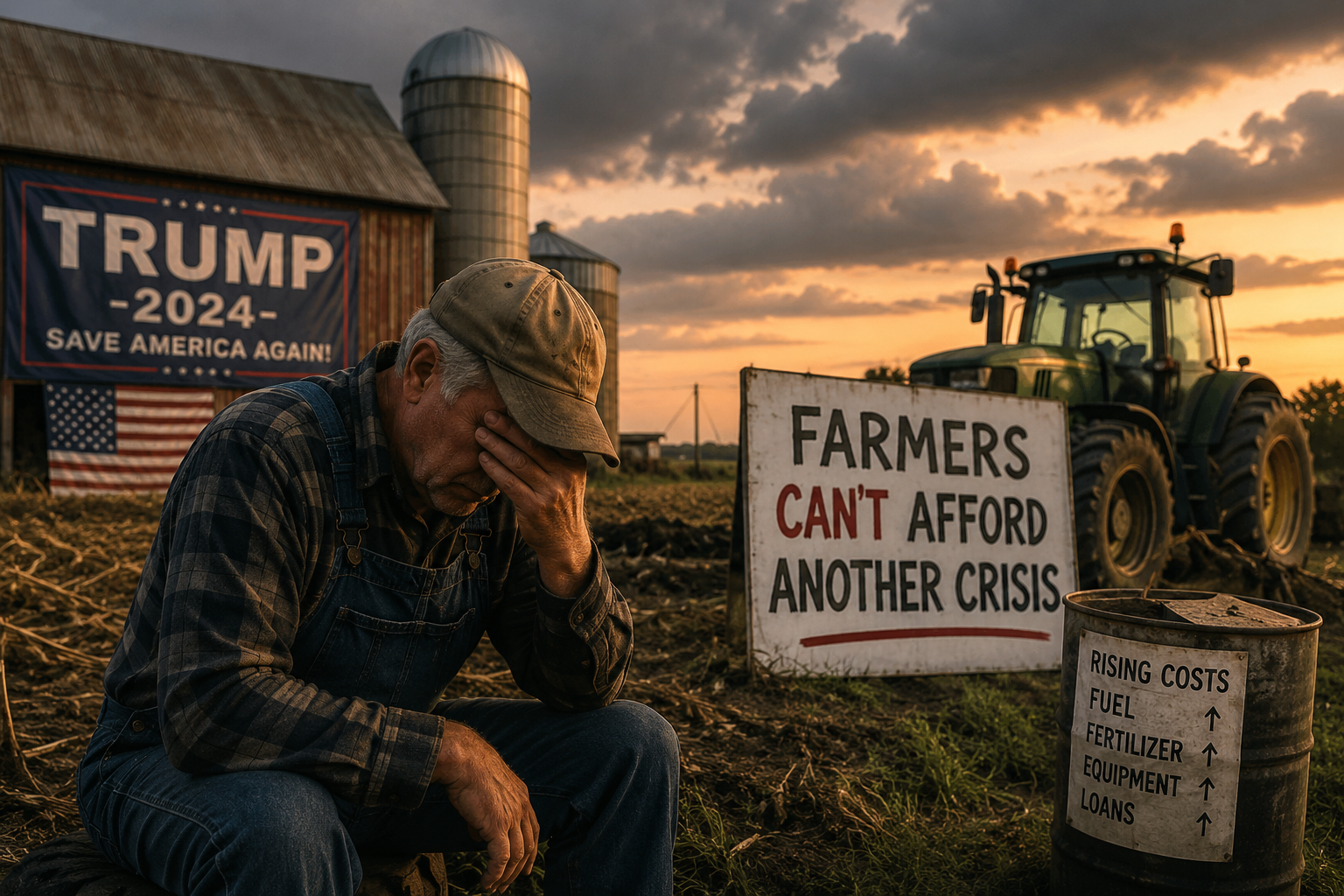
American Farmers Face a New Financial Crisis as Trump Policies Drive Up Costs
American Farmers Face a New Financial Crisis as Trump Policies Drive Up Costs
American farmers are facing growing financial pressure as higher fuel, fertilizer and machinery costs collide with weak crop prices, creating conditions that some in the agricultural sector say are beginning to resemble the farm crisis of the 1980s.
The pressure is particularly severe across the U.S. Corn Belt, where farmers have been hit by rising production expenses and increasing uncertainty in agricultural markets. Diesel and fertilizer prices have climbed sharply, while labor, equipment and interest costs have also increased.
Rising Costs Put Farmers Under Pressure
Fuel has become one of the biggest concerns for agricultural producers because tractors, harvesters and other farm equipment depend heavily on diesel. Fertilizer costs have also surged, making it significantly more expensive for farmers to plant and maintain their crops.
One Nebraska farmer told the Financial Times that a phosphorus fertilizer that cost around $470 per ton a decade ago now costs more than $900.
The rising expenses come at a difficult time for farmers already dealing with weak commodity prices and unpredictable weather.
Trade Policies Add to the Uncertainty
Trump’s trade policies have also created problems for American agriculture. Farmers who rely on exports, particularly soybean producers, have faced difficulties as trade tensions with China have affected demand for U.S. agricultural products.
Agricultural groups say the combination of tariffs, higher input costs and disrupted international markets has made it increasingly difficult for farmers to plan for the future.
Iran War Adds Another Economic Shock
The ongoing conflict involving Iran has added another layer of pressure by disrupting energy and fertilizer markets. Higher fuel prices have increased the cost of operating farms, while disruptions around major shipping routes have contributed to uncertainty in global agricultural supply chains.
Some farmers say the situation is beginning to feel similar to the agricultural crisis of the 1980s, when falling commodity prices, high interest rates and mounting debt pushed many American farms into severe financial trouble.
Rural Support for Trump Begins to Weaken
The economic strain could also have political consequences.
Trump won roughly 69% of rural voters in the 2024 election, but recent polling cited by The Mirror indicates that his approval among rural voters has fallen substantially from the beginning of his second term.
For farmers who strongly supported Trump, rising costs and declining profits are now creating frustration over whether the administration’s economic policies are delivering the relief they expected.
The Trump administration has proposed billions of dollars in emergency assistance for farmers, but agricultural groups argue that additional support may be needed as the financial pressure continues.
With the 2026 midterm elections approaching, the growing frustration among rural voters could become an important political issue as farmers weigh the economic impact of Trump’s policies.


